


MAG Choreography Judging Symbols
Updated: Sep 23, 2025
Helpful ideas for Judging Shorthand Symbols to Represent Choreography and Artistic Elements in Men's Gymnastics.
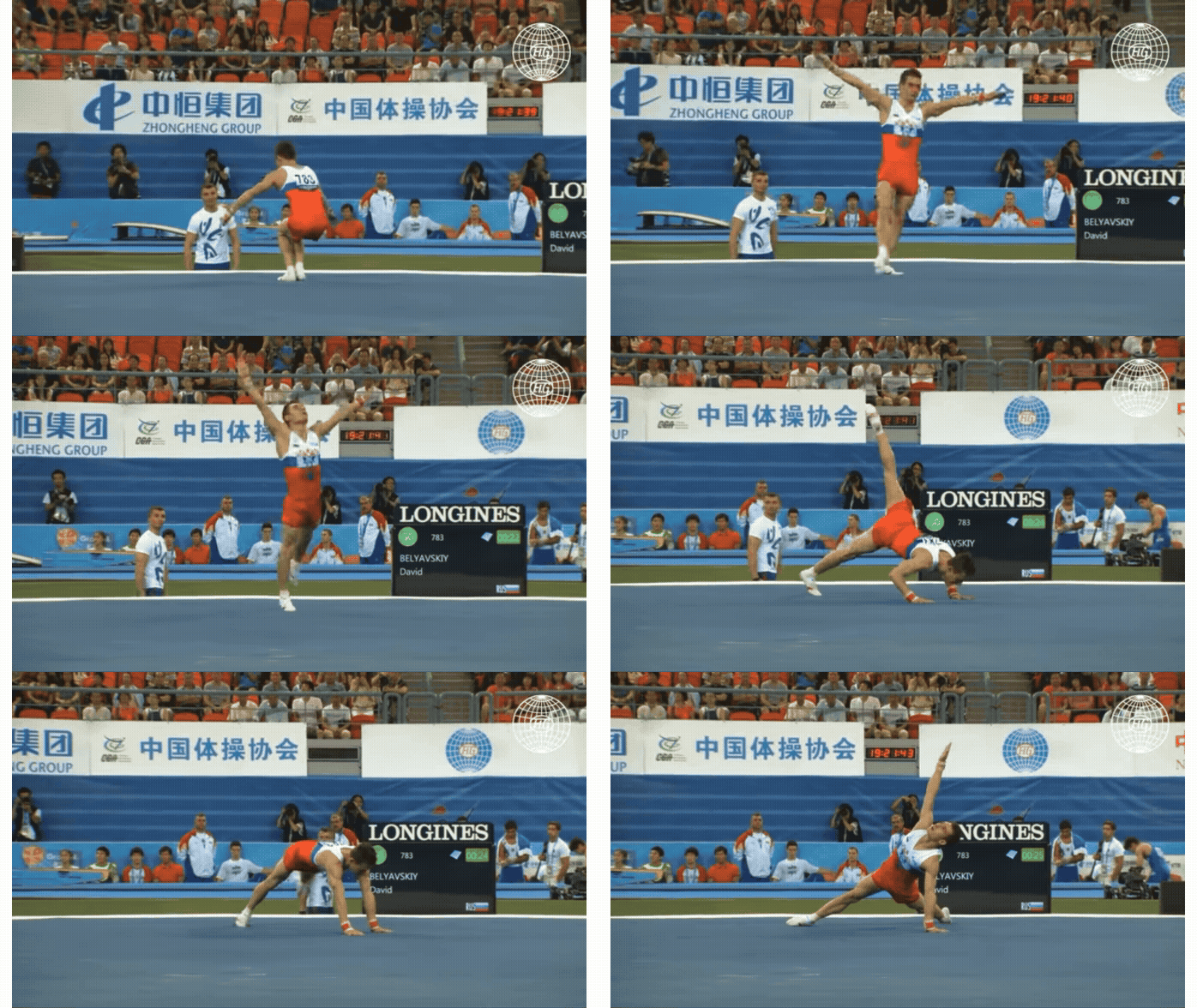
In Newsletter#1, the FIG Men's Technical Committee (MTC) updated the Men's Artistic Gymnastics (MAG) rules pertaining to artistic elements and choreography in MAG floor exercise routines. There are three basic changes and clarifications:
The routine must contain an artistic element. The options have expanded from just a one-leg balance to include choices of leaps, jumps, or turning elements from a specific list of 12 acceptable elements. Failure to include one of these 12 elements will incur a -0.3 Neutral Deduction penalty.
The routine must have different choreographic elements in each corner. Gone are the days when gymnasts could just do a little turning hop into the corner between every single tumbling pass. Each corner must be different, or face a -0.3 Neutral Deduction.
All of this must be done with artistic flair to avoid a -0.1 E jury deduction for movements that lack artistry.
These rules will present challenges not only for gymnasts, but for the judges evaluating them. Judges will need to note the required artistic elements and the choreography performed between tumbling passes to ensure the artistic element is credited and that each transition was different from the others.
Here are some ideas for how judges can notate such elements:
There are basically three types of judging symbols that are used in Men's Gymnastics.
We can use those norms to create symbols for various artistic and choreographic elements.
3 Types of Shorthand Symbols
1. Element symbols based on simplified drawings of the element like these:

L-sit Planche Handstand
These symbols resemble a person performing the element. Or in some cases, a decapitated person.

Notice that these symbols are all drawn as if the gymnast is facing toward the right (or had started the element facing toward the right).
2. Symbols that follow the action of the element look like these:

Backward flipping salto Forward flipping salto Twisting elements
Again, the symbol is drawn following the path of the movement as if the gymnast initiated the element facing towards the right.
3. Symbols that are simple abbreviations of elements, such as these:
S = Stutz D = Diamadov
R = Russian Circles B = Butterfly
We can follow that same structure when creating symbols for artistic and choreographic elements. Most of the element symbols will be constructed from symbols for basic movements or positions, such as:

front support

Jump forward or backward

Twists and turns
Some symbols for the artistic element requirement already exist in the Code of Points or Newsletter #1. (Written in Black). I have also included my personal symbols in BLUE, when they differ from the FIG symbols, to give you some ideas on how to personalize your own symbols to make them work best for you.
Symbols for Required Artistic Elements


I.67- Jump backward to front support.


I.68 - Jump backward with pike to front support (Endo)


I.68 - Jump backward with 1/1 twist to front support


I.116 - Jump backward with a 3/2 twist to front support.


I.117 - Jump forward with a 2/1 twist to front support


I.74 - Butterfly with 1/1 Twist (Tong Fei)


I.75 - Butterfly with 2/1 twist


II.8 - Dive Roll with 1/1 twist


I.61 - Standing scale


I.62 - Scale with 180° split
Based on the symbols that are printed in the 2025-2028 Code of Points or Newsletter #1, it would be logical to determine what some symbols would be for elements that are currently missing symbols:

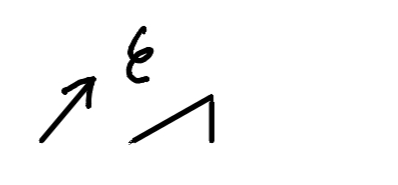
I.115 - Jump forward with 1/1 twist to front support.


I.43 - Jump Forward with 1/2 twist to handstand
Which leaves one element from the specified list of 12 Artistic Elements for which a symbol needs to be created:


I.73 - Stag leap with 1/1 turn.
A symbol can be constructed from the body position in the air, with a jump notation and an indication of the twist. (I use a small triangle to note hops, steps, and jumps.)
Symbols for Choreographic Elements
Differentiating choreographic elements between tumbling passes will prove to be a little more challenging, as those won't necessarily come from a specific list of already established elements. Nevertheless, the movements can be broken down into their foundational parts.
If you have symbols for basic movements, you can create symbols on the fly for what most gymnasts will do. Most of the corner choreography will contain:

Twisting or turning elements
(can use standard twist symbols).

Front support position

Hops, jumps, or leaps.
The MAG code uses directional arrows for jumps,
I use a small triangle to indicate a hop, jump, or step.

Kick with leg above horizontal can use a symbol that resembles that position.

A kneeling transition can also be represented with a symbol that resembles the kneeling position
Using symbols for basic body positions might also be necessary

Tuck Straddle Pike Straight
Let's take a look at the movements contained in the MTC's examples video from Newsletter #1. Of course, gymnasts are not restricted to only the movements in the MTC video, and can get creative with their movements, but it is a good place to start.


Kick with leg above horizontal
Note: Based on the MTC videos, an empty simple step, with or without turn, is permissible when entering or exiting artistic choreography.


Kick - Chasse - Kick


Leg kick to horizontal with 1/1 turn


Kneel


Stag jump without turn


Stag jump without turn


Stag jump with turn.
This element should also fulfill the Artistic Element Requirement (I.73)


Split jump / Scissone


Split jump / Scissone


Small jump with turn


Jump 1/2 to front support.
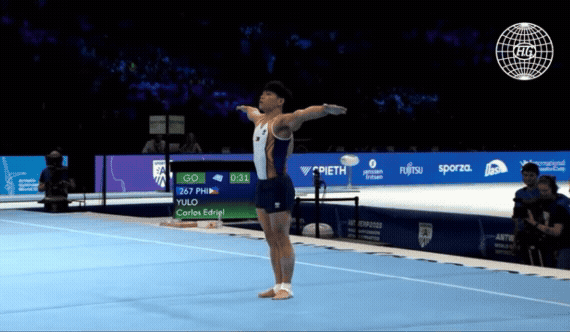

Kick hop 1/2 to front support
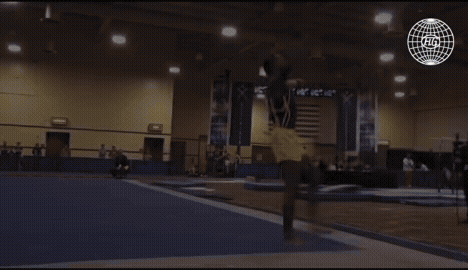

Hitchkick
Some artistic transitional sequences and combinations from the MTC examples


Kick - Hitchkick - Kick turn - Jump 1/1


Hitchkick 1/2 to front support
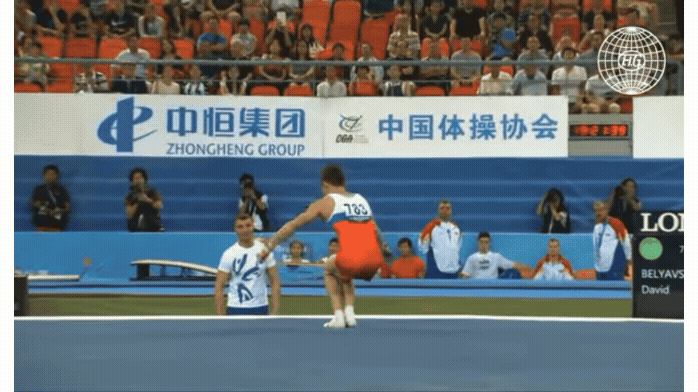

Jump turn - 1/1 turn - Swedish Fall
As you can see, if you have symbols for a few basic movements, they can easily be combined in real time to notate a symbol for most transitions the gymnasts will do, allowing for documentation of required artistic elements and differentiating corner movements.
What symbols, if any, do you plan to use?
Do you have different ideas for how to determine when to apply the -0.3 penalty for repeated transitions?
Share your systems and thoughts with me through messages or in the comments!
This article has been updated to reflect changes from MTC Newsletter #2 Published in September 2025


Hey Kathie-Sue,
This is such a phenomenal resource. Thank you for doing all the work and putting it all in one central place that is concise and clear. It’s better than my vision of “Judging for Dummies!”